Taylor Simon · 20 October 2026
Britain's Country Houses Lead Experiments in Traditional Beekeeping to Support Pollinator Recovery
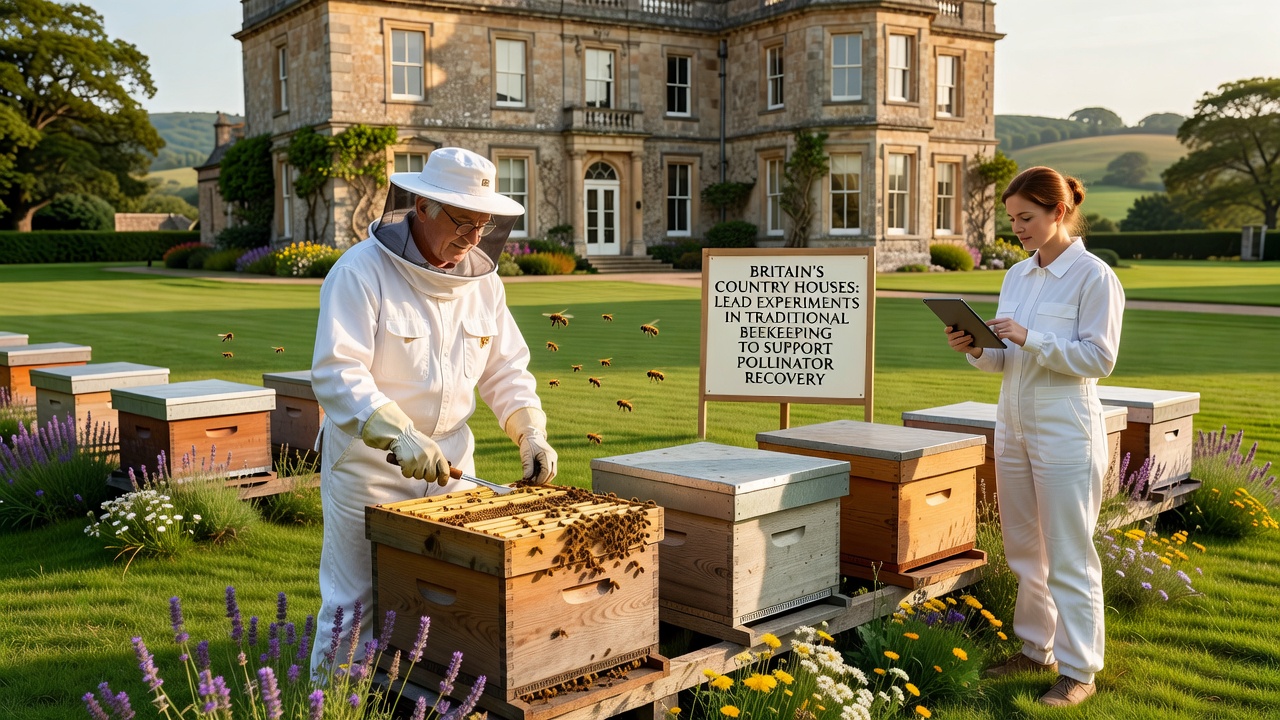
British country houses have taken on active roles in testing traditional beekeeping approaches that support pollinator populations across rural estates, and these efforts connect directly to broader recovery programs that track species health and habitat conditions. Estates with large landholdings maintain skep hives and log hives alongside managed wildflower strips, while estate managers record colony survival rates and foraging patterns throughout the seasons.
Background on Pollinator Trends and Estate Practices
Declines in bee species and other pollinators have prompted coordinated responses from landowners who hold extensive grounds, and data from the Department for Environment, Food and Rural Affairs indicates measurable losses in several native bumblebee populations over recent decades. Country houses often contain remnants of historic parkland that already feature diverse plantings, so managers have added traditional hive structures that avoid the plastic components and frequent interventions common in commercial setups. These properties now serve as testing sites where researchers compare outcomes between older hive types and standard modern frames, with observations showing differences in overwinter survival and parasite loads.
Traditional methods rely on materials such as straw, clay, and hollow logs that provide natural insulation and ventilation, and observers note that these features reduce stress on colonies during temperature swings. Estate teams monitor honey stores and brood patterns without opening hives as often, which limits disturbance while still allowing collection of basic health metrics. Several properties have restored hedgerows and planted nectar-rich species that match the foraging needs of solitary bees as well as honeybees, creating connected corridors that extend beyond garden boundaries.
Implementation at Specific Estates and Data Collection
Properties across regions including the Midlands and the South West have installed clusters of skeps in sheltered locations near existing meadows, and records kept by estate staff show gradual increases in local pollinator sightings after three to four years of consistent management. Researchers visit these sites to collect samples for genetic analysis and to map flower visitation rates, while estate records supply long-term context on land use changes that affect habitat quality. One study coordinated with university partners tracked marked bees leaving traditional hives and found they foraged across wider distances when floral resources remained available through late autumn.
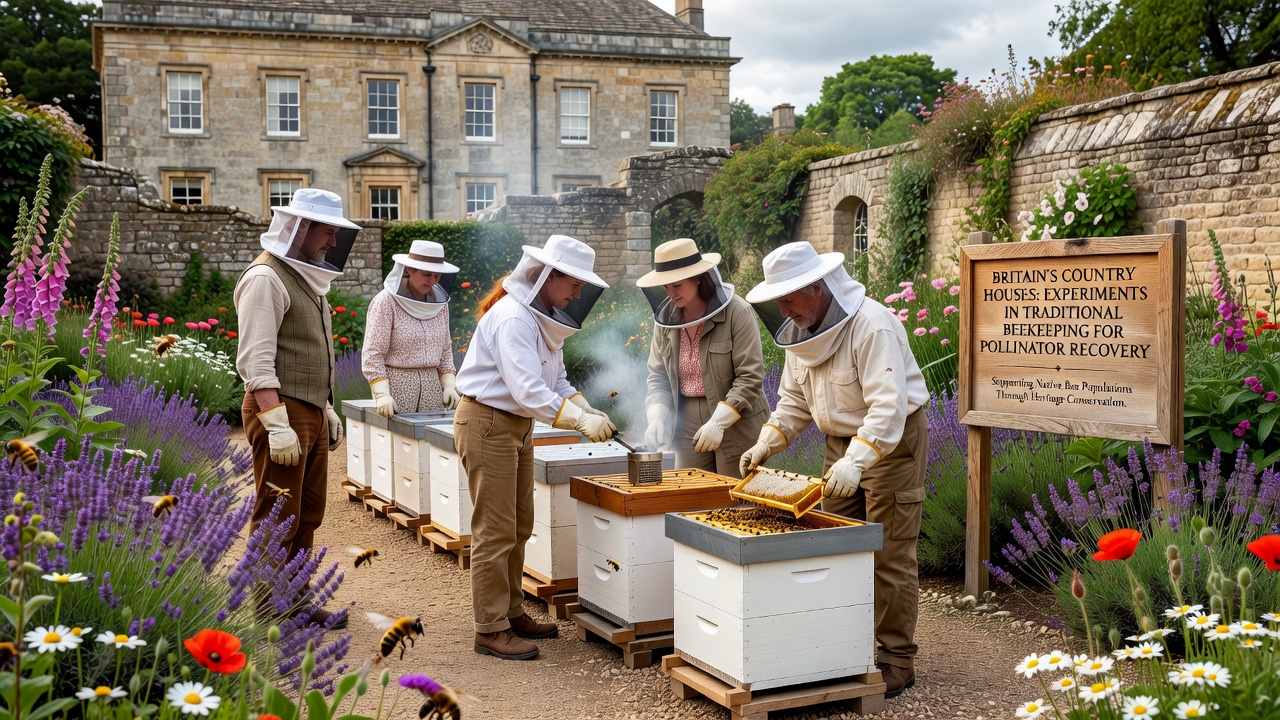
October 2026 brings a scheduled review of initial results from multiple estates, with participating managers sharing raw counts of colony numbers and plant diversity indices at a joint workshop. These gatherings allow comparison across different soil types and microclimates, and participants exchange practical notes on sourcing local straw for new skeps and timing the placement of additional forage strips. Data collected to date suggest that estates maintaining at least 20 percent of their grounds as low-intensity grassland record higher numbers of solitary bee nests compared with areas under intensive mowing regimes.
Collaboration with Research Bodies and Regional Variations
Links between country houses and external research groups have strengthened as estate data feeds into national monitoring networks, and reports from Agriculture and Agri-Food Canada on similar habitat projects provide comparative figures on bumblebee recovery under reduced chemical inputs. Estate teams adapt techniques based on these exchanges while respecting local climate differences, such as adjusting hive entrance sizes for higher rainfall zones common in western counties. Funding for equipment and training sometimes comes through heritage grants that recognise the cultural value of traditional land management alongside biodiversity goals.
Regional differences appear in the choice of hive materials and plant species, with northern estates favouring more robust log hives that withstand stronger winds, whereas southern properties experiment with mixed skep and top-bar designs. All sites maintain detailed logs that record hive construction dates, colony introductions, and seasonal observations, creating datasets that external analysts can use to model pollinator responses under varying management intensities. These records also capture interactions with other wildlife, including birds that nest near hive clusters and small mammals that occasionally shelter in the same hedgerows.
Conclusion
Country house experiments continue to generate practical information on traditional beekeeping methods and their contribution to pollinator support, with ongoing measurements scheduled through the coming seasons. The combination of historic land holdings, consistent record keeping, and connections to wider research efforts supplies a framework for evaluating which approaches produce measurable gains in species presence and habitat connectivity. Future updates from the October 2026 workshop and subsequent field seasons will add further detail to these comparisons across different estate contexts.