Mara Beck · 3 November 2026
Country Estate Stewards Coordinate Cross-Generational Apprenticeship Programs to Maintain Traditional Craft Skills on Historic Properties
Stewards across British country estates have expanded apprenticeship initiatives that pair experienced craftspeople with younger trainees, and these efforts focus on preserving skills such as lime plastering, leadwork, and timber framing that keep historic structures intact. Programs operate on properties managed by organizations including the National Trust and private estates, where daily operations require hands-on knowledge that formal education rarely covers in depth.
Training runs through structured placements lasting between one and three years, during which participants rotate through workshops on masonry restoration, metalwork repair, and garden architecture maintenance. Data from estate records shows that more than 120 apprentices enrolled in similar schemes between 2023 and 2025, with completion rates averaging 85 percent according to internal audits shared by participating properties.
Program Structure and Daily Operations
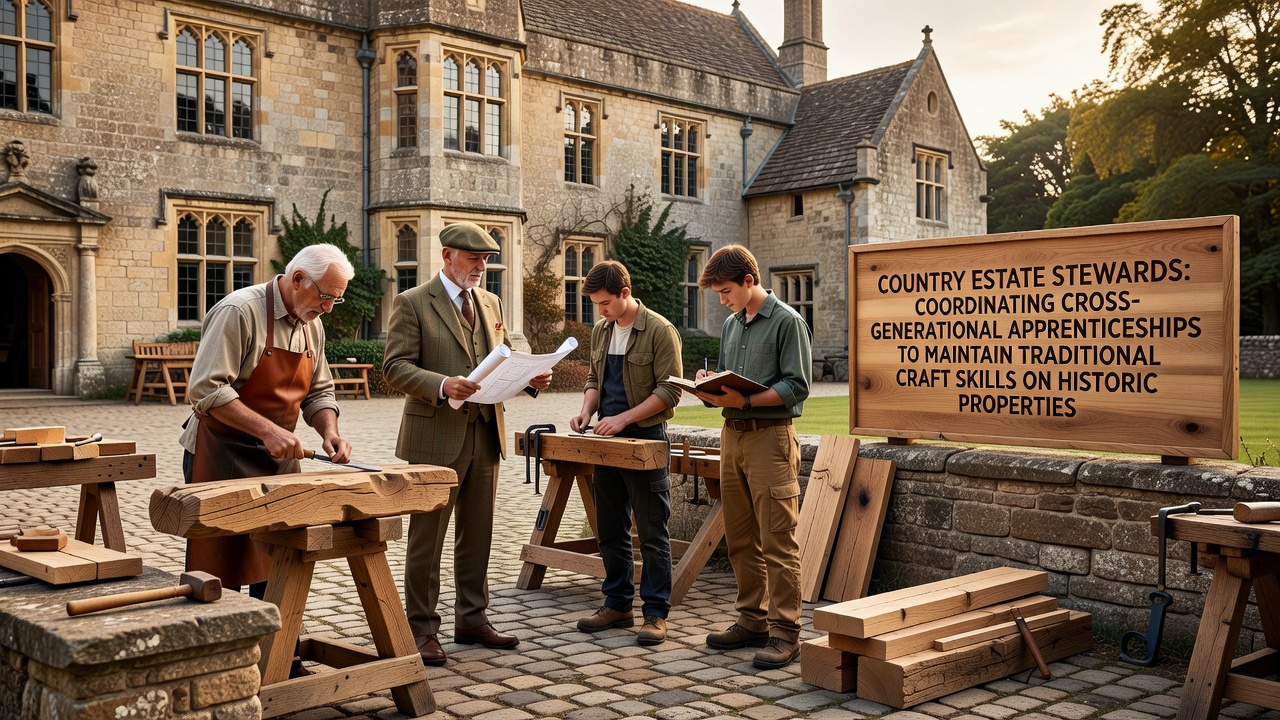
Estate managers schedule sessions around existing maintenance calendars so apprentices contribute directly to ongoing projects rather than working in isolation, and this integration allows trainees to see how traditional methods perform under real weather and usage conditions. Supervisors track progress through documented portfolios that record techniques learned, materials handled, and problem-solving decisions made on site.
Coordination among stewards happens through regional networks that meet quarterly, and these gatherings review supply chains for specialist materials while sharing case notes on repairs completed at different locations. One network based in the Midlands reported in 2025 that joint purchasing reduced costs for lime and oak by 18 percent compared with individual estate orders.
Skills Targeted Across Generations
Traditional thatching remains a core focus because many roofs on listed buildings require annual inspections and periodic renewal using long-straw or combed wheat reed methods. Apprentices learn to assess reed quality, calculate pitch angles, and apply fixings that meet both conservation guidelines and modern building regulations.
Stone carving and letter cutting form another priority area, particularly on estates where memorials, gate piers, and architectural details need periodic restoration. Training includes measurement techniques using period tools alongside digital scanning for accurate replication, and participants practice on surplus stone before advancing to protected surfaces.
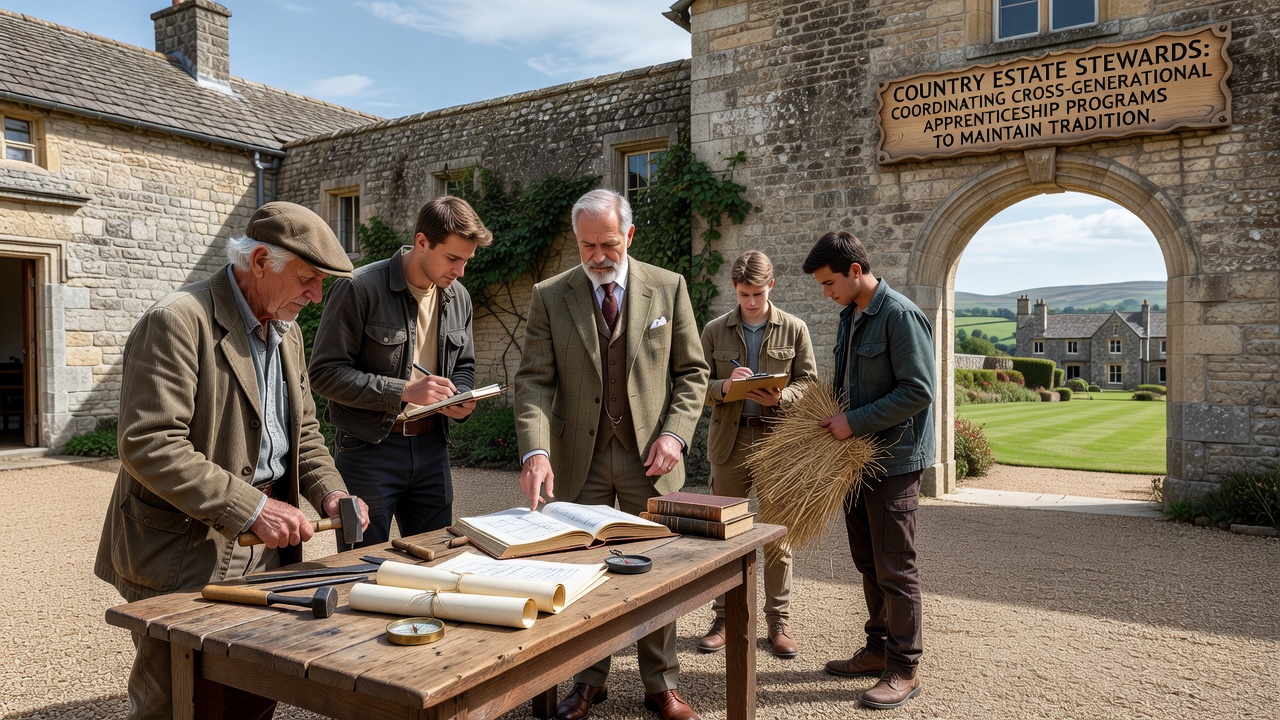
Metalwork apprentices handle tasks ranging from gate hinge fabrication to rainwater system repairs, while garden staff maintain espalier frameworks and ha-ha walls that define historic landscapes. Programs also incorporate archival research so trainees understand the original design intent behind each feature they restore.
Regional Coordination and November 2026 Developments
Stewards from Scotland to Cornwall exchange placement opportunities through a shared database launched in early 2024, allowing apprentices to spend time at multiple sites and gain broader exposure. This mobility has increased retention because participants develop contacts across the sector before finishing their training.
Planning documents indicate that a national skills summit scheduled for November 2026 will bring together estate representatives, heritage organizations, and training providers to review apprenticeship outcomes and set targets for the following five years. Organizers expect attendance from more than 40 estates and aim to standardize assessment criteria while expanding outreach to schools and further-education colleges.
Figures released by Historic England show steady growth in demand for these specialized skills, with listed-building consent applications involving traditional repairs rising 12 percent between 2022 and 2025. Estate coordinators use such statistics to justify continued funding for apprenticeship posts.
Examples from Operating Estates
At one Oxfordshire property, a leadwork apprenticeship program begun in 2021 produced four fully qualified practitioners by mid-2025, and each graduate secured ongoing contracts with nearby estates facing similar roofing challenges. Supervisors noted that the presence of apprentices accelerated routine maintenance schedules because trainees handled preparatory work while experienced staff focused on complex joints.
Another estate in North Yorkshire integrated its program with a local college curriculum, allowing apprentices to earn recognized qualifications alongside practical experience. College tutors visit the site monthly to assess portfolios, and estate stewards provide feedback on how classroom theory translates to on-site conditions.
Observers note that cross-generational pairings often produce unexpected benefits when older craftspeople adopt newer documentation methods suggested by trainees, while younger participants gain insight into the decision-making processes refined over decades of fieldwork.
Conclusion
Country estate apprenticeship programs continue to evolve through coordinated efforts that link individual properties into wider support networks, and these arrangements ensure that craft skills remain available for the upkeep of historic fabric. As the November 2026 summit approaches, participating stewards will assess current enrollment trends and refine placement structures to match projected maintenance needs across the sector.