Wendy Richter · 8 September 2026
DNA Testing Reshapes Disputes Over Medieval Peerage Descents in Britain
Medieval peerage descents in Britain involve complex claims to titles such as baronies and earldoms that trace back to the 11th through 15th centuries, and DNA testing has introduced new methods for verifying or challenging those lineages. Researchers apply Y-chromosome analysis to trace paternal lines while autosomal testing examines broader genetic connections across family branches. These techniques intersect with traditional genealogical records kept in archives like the College of Arms and the National Archives at Kew.
Disputes often arise when multiple claimants assert descent from a single medieval ancestor, and courts or heraldic authorities must weigh documentary evidence against biological data. Cases from the 19th and early 20th centuries relied solely on parish registers and wills, yet modern testing reveals discrepancies where paper trails suggest one connection but genetic markers indicate another. Observers note that such conflicts have increased since commercial DNA services became widely available in the 2010s.
Historical Context of Peerage Claims
British peerages created before the 16th century frequently followed male-preference primogeniture, which means succession passed through sons and then through daughters only in the absence of male heirs. This system produced numerous dormant or abeyant titles when direct lines ended, and later claimants emerged from collateral branches. Historians have documented dozens of such claims dating to the Norman Conquest era, with many involving lands and privileges granted by monarchs such as William I or Edward I.
Legal proceedings in the House of Lords historically adjudicated these matters until reforms in the 20th century shifted some responsibilities to the Crown Office. DNA evidence now supplements the older process because genetic markers remain stable across generations in specific chromosomal regions. Studies conducted at institutions including the University of Edinburgh have mapped Y-DNA haplogroups common among medieval noble families, providing reference points for comparison.
Application of Genetic Analysis in Modern Disputes
Laboratories extract DNA from living descendants and compare it to profiles reconstructed from remains of medieval individuals when available. One notable project examined skeletal material from a 14th-century noble burial and matched segments to contemporary test-takers who share documented paper connections. Results sometimes confirm long-accepted lines while other outcomes prompt re-examination of succession documents thought settled centuries ago.
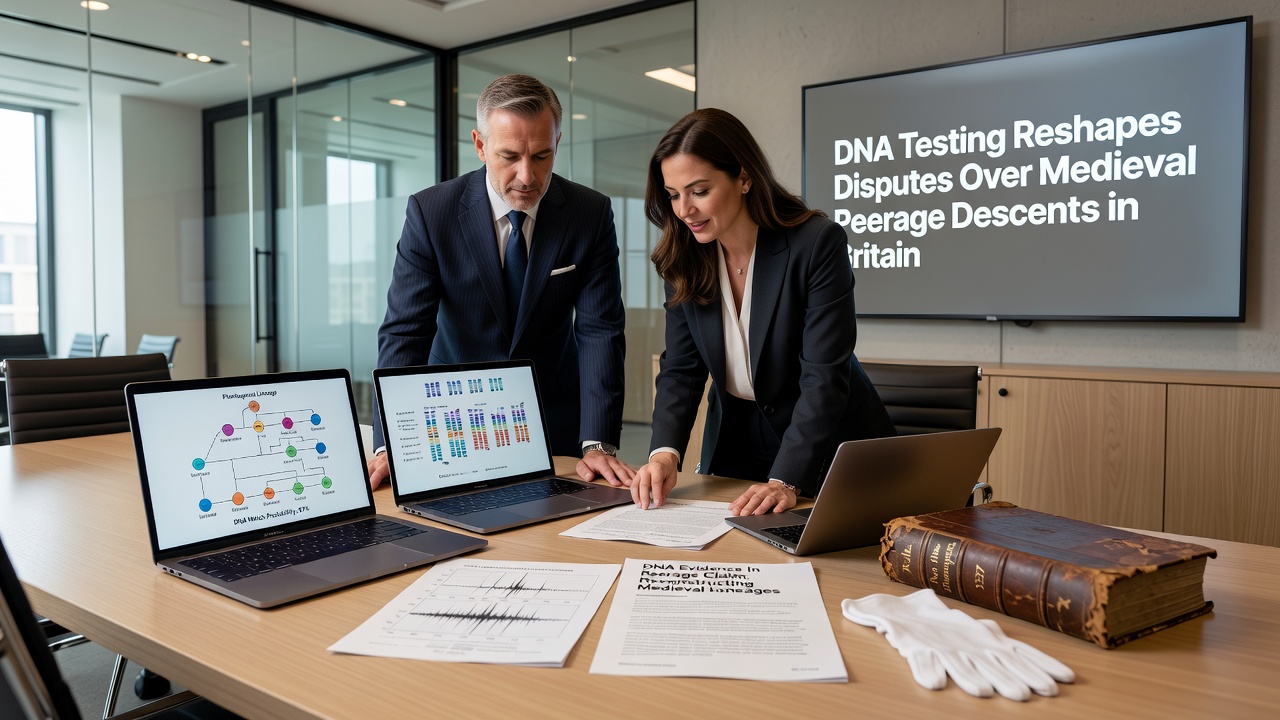
Take the example of a baronial title dormant since 1485 where two family groups presented competing genealogies. Genetic testing performed in 2024 revealed that one group shared no significant markers on the relevant Y-chromosome with verified descendants from the original line, whereas the second group aligned closely. Such findings shift the burden of proof and can accelerate or halt formal claims presented to the Committee for Privileges.
Additional cases involve autosomal matches that identify previously unknown cousins within the extended network of a medieval peer. These connections help resolve questions about female-line descents that traditional records often left ambiguous. Data compiled by the International Society of Genetic Genealogy shows a steady rise in requests for peerage-related testing between 2018 and 2025, with particular interest in titles associated with the Wars of the Roses.
Legal and Institutional Responses
British authorities have begun incorporating DNA reports into official guidelines for succession proofs, although no statute yet mandates genetic evidence. The College of Arms maintains a cautious stance and requires corroboration from multiple independent sources before altering any registered pedigree. Meanwhile, academic conferences scheduled for September 2026 will examine how courts across the United Kingdom and Commonwealth countries handle similar genetic evidence in property and title disputes.
International collaboration has expanded because many noble families intermarried with continental European lines, and researchers now cross-reference British results with databases maintained in France and the Low Countries. A joint study published by teams from the University of Leicester and the Max Planck Institute for Evolutionary Anthropology demonstrated that certain haplogroups appear at higher frequencies among individuals claiming descent from 13th-century English earls, offering statistical support for targeted testing programs.
Challenges and Limitations
Non-paternity events, adoptions, and incomplete historical records can produce misleading genetic signals that require careful interpretation. Experts emphasize that a single DNA match rarely settles a claim on its own because medieval pedigrees contain numerous branches separated by hundreds of years. Sample contamination and low-quality ancient DNA further complicate efforts to build reliable reference profiles.
Privacy considerations also arise when living individuals submit samples that might affect distant relatives who have not consented to testing. Regulatory frameworks in the United Kingdom, guided by the Human Tissue Authority, address consent and data protection while allowing genealogical research under strict conditions. Observers note that these safeguards help maintain public trust in the process.
Conclusion
DNA testing continues to alter the landscape of medieval peerage disputes by supplying biological data that complements or contradicts centuries-old documents. As more claimants undergo analysis and reference databases grow, the number of resolved and newly opened cases will likely increase through 2026 and beyond. Institutions responsible for heraldry and succession are adapting procedures to integrate these findings while preserving the evidentiary standards that have governed British titles for generations.